

Not long ago, a city’s holiday lighting budget was mostly a utility bill waiting to happen. Thousands of incandescent bulbs burning through December nights ran up costs that Public Works directors couldn’t ignore. The displays looked great, but the energy draw was hard to justify, especially for cities with sustainability commitments and taxpayers watching every line item.
That math has changed. Commercial LED technology has made it possible to deliver grand-scale municipal holiday lighting without the energy overhead that used to come with it. Cities like Dallas and Plano are already moving in this direction, treating public holiday displays as part of a broader commitment to efficient, responsible operations. Well-executed holiday lighting in Dallas shouldn’t be a tradeoff between spectacle and sustainability. With the right partner, it doesn’t have to be.
The Christmas Light Company has handled large-scale civic and government installations across Texas since 1997. Our commercial-grade LED systems are built for the kind of displays cities need: big enough to anchor a downtown corridor, efficient enough to support an ESG-conscious budget.
Engineering Efficiency: The Technical Advantage of Commercial LEDs
The energy numbers are straightforward. Modern LED technology uses up to 90% less electricity than traditional incandescent bulbs, producing the same light output. For a city running thousands of feet of lighting across parks, streetscapes, and public plazas, that reduction translates directly into lower utility costs for the season.
Commercial LED holiday lights also last far longer than the retail-grade product most people are familiar with. Professional-grade fixtures are rated for five to seven full seasons of use. Consumer lights from a big box store might last one season before bulbs start dropping out. That difference matters when you’re thinking about total cost over a multi-year contract, not just year one.
Durability also reduces waste. A set of commercial LED holiday lights that lasts seven years generates a fraction of the landfill impact of disposable retail products cycled out every twelve months. For city managers working toward sustainability targets, that’s a real and measurable benefit.
There’s a grid impact consideration, too. The winter months already put a strain on municipal power infrastructure. Shifting a large civic display from incandescent to LED reduces peak draw during the exact weeks when demand is highest. That’s good for the grid and the budget.
Enhancing Public Spaces with “Trees of Light”
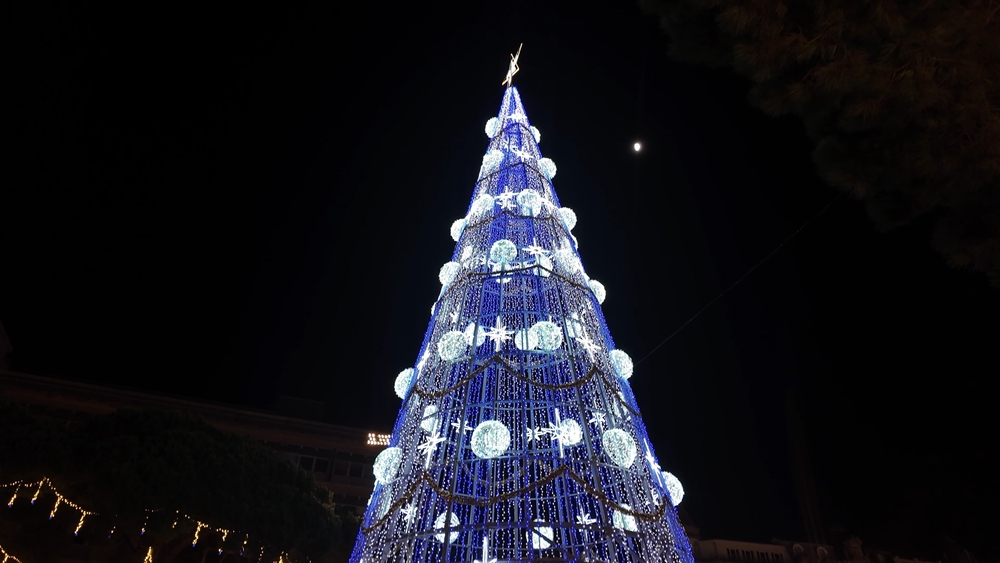
The centerpiece of most downtown holiday displays is the tree. Get it right, and it becomes a landmark.
Residents plan visits around it. Families photograph it. Local media cover the ceremony. A well-placed “Tree of Light” does more for community engagement than almost any other investment a Parks and Recreation department can make.
The Christmas Light Company builds outdoor trees up to 140 feet tall, engineered for public spaces where safety and structural integrity matter as much as visual impact. Open city squares and park lawns in North Texas present real wind-load challenges, especially in January when gusts off the plains can be sustained and strong. Every large-scale display we install is engineered for local weather conditions from the start.
Municipal holiday lighting also offers branding opportunities that cities don’t always take advantage of. Lighting color palettes, ornament designs, and display themes can all reflect a city’s identity. A city with a Texas heritage theme or a distinct civic color can carry that theme through the display in a way that feels cohesive rather than generic.
Christmas light installation in Plano, TX, for example, benefits from the city’s clean, modern civic aesthetic. Displays that match that identity feel intentional. They reinforce the city’s brand every time a resident or visitor photographs them and shares the image.
Smart Controls and Maintenance for Public Works
Energy efficiency doesn’t stop at the bulb. How and when the lights run matters too.
Photocell sensors and programmable timers let a city run displays only during peak evening hours, automatically adjusting to seasonal changes in daylight. A display that switches on at dusk and off at midnight uses significantly less energy than one running on a fixed overnight schedule. Smart controls make it easy to set and adjust that precision.
Holiday lighting installations that use programmable controls also reduce the need for manual oversight. City staff doesn’t have to monitor displays nightly or dispatch crews to manually switch systems. That’s time and labor redirected toward essential winter services.
The turnkey benefit extends beyond just controls. When a city outsources its holiday display to a professional contractor, the city’s crew is freed entirely from installation, repairs, and takedown. No overtime for climbing light poles in December. No equipment storage budget. No scheduling gymnastics before Thanksgiving.
Our team handles design, permitting, installation, weekly maintenance checks, on-call repairs, and post-season storage. Equipment is stored in climate-controlled conditions between seasons, extending product life and protecting the city’s investment.
A Smarter Investment in Christmas Lights for North Texas Cities
Public holiday displays aren’t going away. Residents expect them. Community engagement depends on them. The question isn’t whether to have a display; it’s how to do it in a way that delivers real community value without waste.
Commercial LED technology, smart controls, and professional management answer that question. The Christmas Light Company brings all three together for public holiday display projects across North Texas.
For holiday lighting and municipalities throughout the North Texas region, contact us today to request a proposal for your city’s upcoming holiday season.